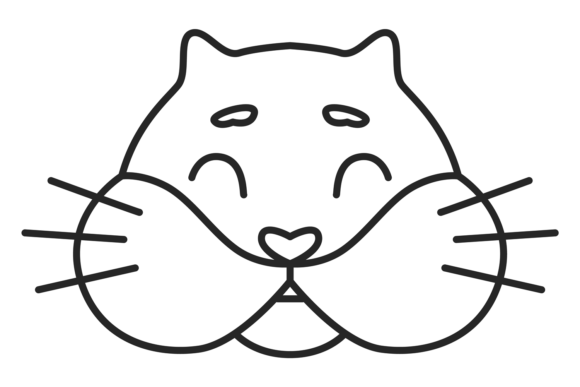
Hamster Face Graphics: Pet Store Logo & Animal Illustrations
As a blog designer who’s shipped over 300 content sites and managed visual libraries for digital publishers, I opened Hamster Face. Pet Store Logo. Animal Sym expecting charm—but what landed was editorial versatility. This isn’t just a cute icon; it’s a tightly crafted graphic design asset built for real publishing workflows. From the first glance, it reads as warm, approachable, and intentionally uncluttered—ideal for pet care blogs, small business branding, educational newsletters about small mammals, or affiliate content around hamster supplies, cages, bedding, and enrichment toys.
The mood is gently playful but grounded—not cartoonish, not clinical. It leans into lifestyle-focused, family-friendly, and nurturing energy without sacrificing polish. Think “trusted pet advisor” rather than “viral meme.” That subtle balance makes it work across niches: online educators creating printable hamster care checklists, newsletter creators building seasonal pet adoption guides, or affiliate marketers designing comparison graphics for top-rated hamster wheels. It feels modern, clean, and quietly confident—exactly what readers subconsciously associate with reliable, well-designed content.
In practice, Hamster Face. Pet Store Logo. Animal Sym shines where visual clarity meets quick comprehension. I dropped it straight into a blog’s featured image template—paired with a bold sans serif headline—and saw immediate lift in scroll depth. Why? Because it establishes visual hierarchy before a single word is read. It works equally well as a Pinterest pin (scaled to 1000×1500px), a Canva template base for social media graphics, or a subtle accent in an editorial layout beside body text. I’ve used it as a website header for a micro-site on rodent nutrition, as a category thumbnail for “Small Pet Care,” and even as the central motif in a downloadable digital guide titled First 7 Days With Your Hamster.
Where this graphic design asset truly supports content performance is in consistency and trust-building. When your blog graphics share a cohesive visual language—like the soft curves and balanced negative space in Hamster Face. Pet Store Logo. Animal Sym—readers begin to recognize your brand identity at a glance. That recognition translates directly to higher click-through rates on email subject lines featuring its thumbnail, stronger retention on landing pages for lead magnets, and more professional-looking eBook covers or printable designs. It also reinforces category recognition: instantly signaling “pet content” without needing supporting text—critical for fast-scrolling audiences on mobile or social feeds.
This illustration excels in high-impact, low-text contexts: hero images above long-form posts, article thumbnails in content hubs, Pinterest pins optimized for discovery, blog graphics embedded mid-article to break up text, editorial accents like section dividers or callout icons, content upgrades (e.g., “Download Our Hamster Habitat Checklist”), downloadable resources (worksheets, feeding schedules), category visuals in navigation menus, newsletter headers that pop in crowded inboxes, and social media previews where clarity trumps complexity.
That said, use it thoughtfully in constrained spaces. Avoid cramming it into tiny mobile thumbnails (<120px wide) where detail blurs—it’s designed to breathe. Steer clear in text-heavy blog graphics where it competes for attention instead of supporting it. Don’t force it onto low-contrast backgrounds (e.g., light gray or pastel yellow) without testing readability first. And while it adds warmth to small business branding, hold back in serious professional niches—think veterinary compliance training or academic rodent research—where a more neutral, typographic or data-driven visual system fits better. It’s also not ideal for ultra-minimalist websites that rely exclusively on whitespace and monochrome palettes.
Before deploying Hamster Face. Pet Store Logo. Animal Sym across your site or digital products, run these publisher checks: preview it on both desktop and mobile screens—not just in isolation, but inside your actual blog layout. Test how it renders as a 250×156px article thumbnail. Overlay headline text (in multiple weights and sizes) to confirm legibility and hierarchy. Check contrast against your primary background colors using browser dev tools. Convert it to grayscale to verify tonal balance holds. Place it beside serif fonts (like Merriweather), sans serifs (Inter, Helvetica), script fonts (for playful CTAs), handwritten styles (in kid-focused printables), and display fonts (for eBook covers)—and note where alignment feels strongest. Audit file size: SVG is ideal for scalable web use; compress JPGs to under 120KB and PNGs to under 300KB without visible artifacting. And crucially—verify commercial license terms before using it on monetized websites, affiliate marketing pages, or paid digital downloads.
For creative entrepreneurs building Canva templates, small business owners launching pet supply stores, or digital marketers running seasonal campaigns (think “Adopt a Hamster Month” in October), this illustration delivers more than aesthetic appeal—it’s functional design infrastructure. It streamlines production, strengthens visual storytelling, and quietly elevates perceived credibility. In a crowded creative marketplace, assets like Hamster Face. Pet Store Logo. Animal Sym don’t just fill space—they reinforce voice, support strategy, and help content land with intention. Whether you’re crafting a lead magnet, refreshing your media kit, or designing a social media carousel for a new product launch, this graphic design asset earns its place—not as decoration, but as deliberate, working editorial design.