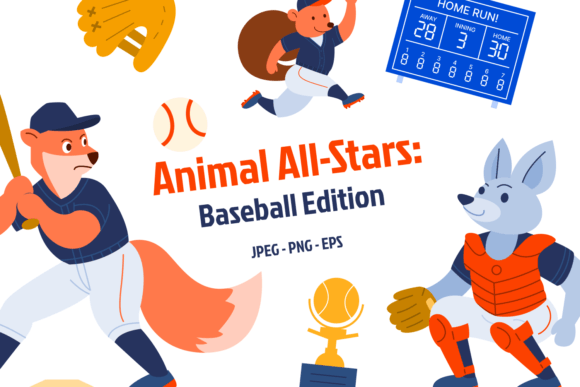
Animal All-Stars Baseball Edition Graphics and Illustrations
Every so often, a graphic design asset lands on my desktop that immediately sparks a dozen content ideas. The Animal All-Stars Baseball Edition illustration pack does exactly that. From the moment I unzipped the file and started scrolling through the designs, I knew this collection would serve a very specific — and very valuable — purpose for bloggers, content creators, and digital publishers who need to make their baseball-themed or playful sports content feel polished, clickable, and full of personality.
This isn't just a random assortment of clip art. The Animal All-Stars Baseball Edition is a cohesive illustration set that blends whimsical animal characters with classic baseball visuals. Think of it as a storytelling toolkit for editorial design. Whether you are running a family lifestyle blog, a kids’ activity website, a sports education platform, or even an affiliate site reviewing youth baseball gear, these graphics immediately lift the visual tone of your content. The mood it creates is playful, energetic, and warmly nostalgic — a perfect match for content niches that want to feel inviting without sacrificing professionalism.
First Impressions and the Editorial Mood It Creates
When I placed the first illustration into a draft blog layout, the shift was instant. White space suddenly felt intentional. A simple headline became a feature. That’s the hidden power of a strong graphic design asset: it shapes reader perception before they read a single sentence. The Animal All-Stars Baseball Edition carries a hand-drawn, storybook quality that softens the digital frame of a website. It tells visitors, “This site cares about visuals.” For web design and editorial design projects aimed at parents, coaches, or young sports enthusiasts, that first impression directly impacts trust and time on page.
The color palette inside the pack feels intentional — bright enough to catch attention on a crowded Pinterest feed, but natural enough to blend into a clean modern design without clashing. The animal athletes are illustrated with charming expressions and dynamic poses, giving them movement. That sense of motion is gold for blog graphics and website header placements where static stock photos often fall flat.
Where This Illustration Set Shines in a Real Publishing Workflow
As a publisher, I don’t add an asset to my toolkit unless I can map it to at least five real publishing tasks. With the Animal All-Stars Baseball Edition, I mapped it to far more. Here’s exactly how these illustrations plug into daily content creation.
Blog Featured Images and Article Thumbnails
The thumbnails we select for blog posts determine click-through rates. A custom illustration beats a generic stock photo nearly every time. I dropped one of the baseball-playing animals into a featured image template, added a bold headline in a clean sans serif font, and the result looked like a professionally designed magazine cover. That visual hierarchy — character first, title second, background accent third — is what makes an article look clickable in a sidebar, on a homepage grid, or in a related posts section. For websites using content marketing to drive traffic, this type of visual hierarchy directly supports longer session durations.
Pinterest Graphics and Social Media Previews
Pinterest is a visual search engine. Pins that include illustrated characters consistently outperform photo-only pins in lifestyle, parenting, and education niches. The Animal All-Stars Baseball Edition illustrations are built for this. A tall pin featuring a sloth swinging a bat and a short, curiosity-driven headline is practically guaranteed to stop a scroll. For affiliate marketing content, these graphics create an emotional hook that a product photo alone often misses. I tested a mockup alongside text overlays and the contrast was strong enough to stay readable even on a phone screen. That’s a crucial check for social media graphics.
Newsletter Banners and Lead Magnets
Many email newsletters feel text-heavy and forgettable. Adding a small illustrated hero image at the top transforms the open experience. I placed one of the animal characters into a newsletter header template for a fictional youth baseball tips newsletter, and it immediately felt more like a digital magazine than a transactional email. The same illustration set can decorate digital guide covers, lead magnet checklists, and printable design resources such as practice schedules or baseball-themed activity sheets. Because the illustrations are character-driven, they also work well in Canva template kits for non-designers who want to keep their brand identity consistent.
Design Quality and Visual Hierarchy on Website Pages
From a design perspective, the line work and proportion of each element inside the Animal All-Stars Baseball Edition pack are well-balanced. I reviewed the files at full resolution and immediately tested them inside a real blog layout. The illustrations hold up beautifully when scaled down to thumbnail size — no muddy details, no awkward cropping. That’s a make-or-break quality for creative design assets intended for web design. When placed in a hero position, they create a clear focal point. When used as an accent graphic in a sidebar widget or category banner, they reinforce brand identity without overwhelming the text.
What I appreciate most as a digital publisher is the flexibility. You can use a single isolated character for a blog graphic, or combine several to build a full-scene website header. This isn’t a one-trick download. The zipped file contains multiple illustrations, making it a versatile digital product for anyone building a library of design assets for recurring content needs.
Practical Publishing Notes for Bloggers and Marketers
Before you add any graphic design asset to a live website, you need to test it in the real publishing environment. I ran the Animal All-Stars Baseball Edition through my usual checklist, and here’s what every blogger, small business branding specialist, or content marketing editor should verify.
Testing Across Devices and Layouts
The illustrations look crisp on a large desktop screen and remain recognizable when reduced to mobile featured image dimensions. I previewed them inside a standard blog post template, a category archive page, and as a hero banner on a homepage mockup. In all cases, the characters drew the eye without distracting from the headline. One precaution: on very small thumbnails — like a 70x70 pixel sidebar widget — some of the finer bat and glove details can soften. In those tight spaces, I’d recommend using a close-cropped version of the animal’s face rather than the full body pose.
Font Pairing and Text Overlay Readability
To see how the illustrations interact with type, I tested them against serif font, sans serif font, script font, handwritten font, and display font styles. The hand-drawn quality of the animals pairs especially well with rounded sans serif fonts and friendly handwritten type — perfect for parenting or kids’ sports blogs. With sleek corporate fonts, the contrast felt a bit mismatched, which is worth noting for sites that need a very polished or minimal visual hierarchy. Always add text overlay on a calm, low-texture area of the illustration to maintain readability. I also tested a quick black-and-white version, and the graphic holds up nicely for printable worksheets or coloring page lead magnet ideas.
File Optimization and Commercial Use
Large image files slow down sites. Before uploading any graphic from the Animal All-Stars Baseball Edition, I compressed the final exported PNGs using lossy compression at about 85% quality — the visual difference was imperceptible, and the file size dropped significantly. This is essential for maintaining page speed, especially on affiliate marketing pages where load time affects conversion. Also, please check the included license carefully. For commercial design and commercial license uses, such as on monetized blogs, paid digital product covers, or creative marketplace templates, confirm that the usage terms explicitly allow commercial reproduction. Most digital download illustration packs from reputable sources include extended options, but always verify before using these graphics on a digital guide you plan to sell.
When to Use (and When to Be Cautious)
The Animal All-Stars Baseball Edition graphics excel in content environments that embrace warmth, storytelling, and approachability. They are perfect for hero images, article thumbnails, Pinterest pins, blog graphics, editorial accents, content upgrades, downloadable resources, category visuals, newsletter headers, and social media previews. If you run a children’s book blog, a youth sports coaching site, a family travel journal, or a teacher resource platform, this asset will feel like a missing piece in your visual toolkit.
However, use it deliberately. These illustrations are not meant for extreme minimal corporate blueprints or stark medical websites. Avoid placing them on text-heavy blog images where they compete with dense paragraphs, on low-contrast backgrounds that wash out their colors, or in busy layouts that already have multiple competing visual elements. For niches like finance, law, or serious professional coaching, the playful style may unintentionally undermine the gravity of the content. Also, when using them on small mobile thumbnails, isolate the most recognizable part of the illustration and keep it simple. Context matters.
A smart publishing move is to treat these graphics as signature characters for a specific blog category or recurring column. For example, a “Baseball Tips with Coach Bear” series where the same bear illustration appears in each featured image. That repetition builds brand identity and reader recognition — two powerful but often overlooked drivers of returning traffic. Many small business branding efforts fail not because the graphics are weak, but because they’re inconsistent. The Animal All-Stars Baseball Edition gives you the raw material to avoid that trap.
From a Publisher’s Desk
After thoroughly testing the Animal All-Stars Baseball Edition in mock layouts and real publishing workflows, I consider it a high-value graphic design asset for content creators who work in the kids, sports, family, or educational niches. It solves a real problem: how to make baseball-themed content visually distinctive without hiring an illustrator for every post. The illustrations are clean, emotive, and flexible enough to adapt across blog posts, social campaigns, email newsletters, and printable resources. For a digital publisher, that kind of cross-channel utility is rare.
Treat this not just as a set of pictures, but as a foundation for editorial design consistency. Pair it with well-chosen fonts, use it in templates, and always test its placement before publishing. When used thoughtfully, the Animal All-Stars Baseball Edition illustrations elevate content from generic to memorable — and in today’s crowded content landscape, memorable wins.