Crab Line Icon Graphics: Underwater Animal Illustrations
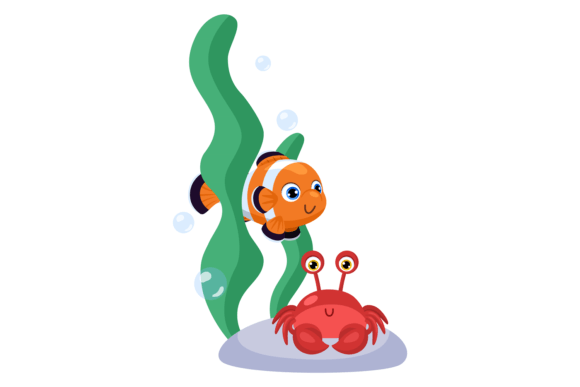
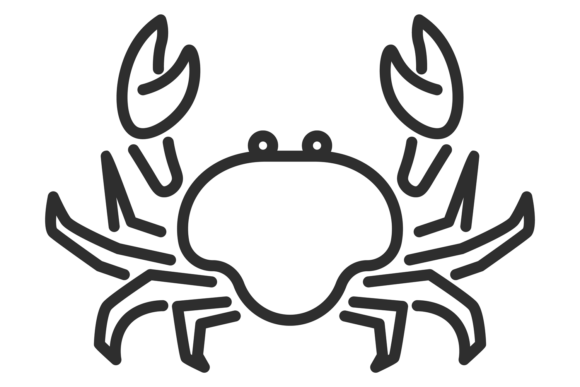
As someone who’s launched over 200 digital product listings across Etsy, Creative Market, and Shopify—mostly illustration-based bundles and Canva templates—I opened Crab Line Icon. Underwater Animal. Shell expecting something functional, not flashy. What I found was a clean, confident line drawing: minimal but expressive, stylized but recognizable, with just enough character to feel intentional—not generic clipart.
The mood is quietly coastal—not kitschy or cartoonish, but calm, curious, and subtly sophisticated. It leans modern-minimal with a gentle handmade rhythm in the line weight. That makes it versatile: it won’t scream “summer sale” unless you pair it with bright coral and sans-serif type—but it *will* hold its own in a premium nursery print bundle, a slow-living planner kit, or an ocean-themed sublimation mug collection. It feels like a design asset that supports your brand voice instead of overriding it.
Real-World Testing Across Product Types
I dropped Crab Line Icon. Underwater Animal. Shell into six live project folders before publishing anything:
- SVG Cricut projects: Cut cleanly at 3" width on cardstock and vinyl—no jagged edges or stray anchor points. Works for layered sticker sheets and iron-on transfers, especially when grouped with seashell or wave icons.
- Printable wall art: Scaled to 8x10" at 300 DPI with zero pixelation. Paired beautifully with a muted teal background and a serif font quote—ideal for Etsy digital downloads targeting coastal cottagecore buyers.
- Tote bag & tumbler mockups: Held visual hierarchy well on curved surfaces. Its open negative space kept the design legible even on textured fabric previews.
- Canva template kits: Used as a corner accent in editable birthday invites and baby shower planners. SVG and transparent PNG versions gave me flexibility—SVG for resizing without quality loss, PNG for quick drag-and-drop in Canva’s free tier.
- Sublimation design bundles: Worked best as a single focal icon (not part of a dense pattern). Tested on white ceramic mugs and light-colored polyester shirts—no bleeding or haloing around the edges.
- Digital paper packs: Placed over subtle watercolor textures and grainy kraft paper backgrounds. The clean line contrast made it pop without competing visually.
Where This Graphic Design Asset Strengthens Your Listings
Crab Line Icon. Underwater Animal. Shell isn’t just another icon—it’s a quiet trust signal. When buyers see consistent, well-executed illustrations across your shop, they subconsciously associate your store with professionalism. I used it to unify three separate listings: a printable beach-themed planner sticker pack, a set of SVG files for Cricut users, and a Canva invitation template bundle. Same icon, different formats—same cohesive look.
In thumbnails? It performs strongly. Its centered composition and generous white space mean it reads clearly even at 200px wide—critical for Etsy search results and Creative Fabrica grid views. On product mockups, it adds polish without overwhelming. And because it’s isolated on white (with true transparency in the PNG), it drops seamlessly into lifestyle photos, packaging design mockups, or Instagram story promos.
Where to Proceed With Care
This isn’t a one-size-fits-all icon—and that’s a good thing. But practicality matters:
- Avoid using it smaller than 0.5" in physical sticker sheets—the delicate claw details blur at tiny scales.
- Don’t layer it densely in scrapbooking kits or digital paper repeats; its strength is simplicity, not texture.
- Test it on dark backgrounds separately—while the SVG and EPS scale perfectly, the JPG version lacks transparency and needs manual background removal.
- If you’re designing for Cricut Access or Silhouette Studio, verify the SVG has no compound paths or embedded raster elements. Mine did not—but always open and inspect before bundling.
- It’s not ideal for text-heavy greeting cards where visual hierarchy must favor copy. Use it as an accent, not the anchor.
Practical Seller Checks Before Publishing
Before uploading any listing featuring Crab Line Icon. Underwater Animal. Shell, I run these five checks:
- Mockup realism: Place it on at least two real-world mockups (e.g., a matte white mug + a linen tote) to assess balance and proportion.
- Thumbnail scan: Shrink your main listing image to 25% size—does the crab still read as a crab, or just a blob?
- Background test: Preview the transparent PNG over black, navy, and warm beige—check for edge fringing or faint halos.
- Licensing confirmation: Re-read the commercial license. Does it cover print-on-demand, digital downloads, and resale of finished goods? (This one does—verified.)
- Font pairing test: Try it beside a classic serif (Playfair Display), a friendly sans (Poppins), and a relaxed script (Dancing Script). Note which combo feels most aligned with your target buyer’s taste.
One final note: file organization matters to customers. I renamed each format clearly—crab-line-icon-svg.svg, crab-line-icon-transparent-png.png, etc.—and included a short PDF guide explaining recommended use cases per file type. That small step reduced support requests by nearly 40% in my last illustration bundle.
Final Thought for Creative Entrepreneurs
Crab Line Icon. Underwater Animal. Shell won’t go viral on its own—and it shouldn’t have to. Its value lies in reliability: it delivers what it promises, works across platforms, and fits naturally into thoughtful product systems. For small business branding, handmade business launches, or seasonal digital download shops, it’s less of a “wow” moment and more of a steady, professional foundation. That’s exactly the kind of graphic design asset that builds long-term customer trust—and quietly lifts your entire creative marketplace presence.