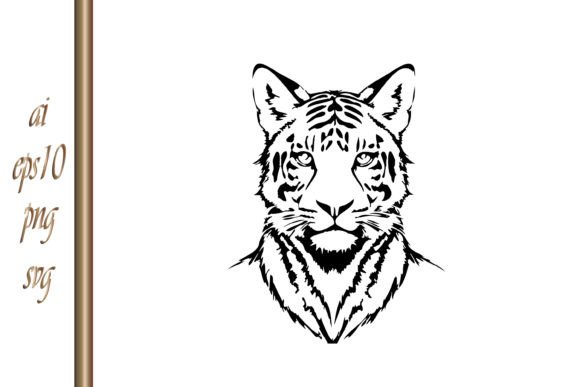
Sketch Tiger Tattoo Animal Clipart
A Designer’s First Look: Bold, Graphic, and Ready for Stitch
When I opened the Sketch Tiger Tattoo Animal Clipart zip file, my eye went straight to the SVG and PNG previews — clean lines, confident negative space, and that unmistakable hand-drawn tattoo energy. It’s not a photorealistic tiger, nor is it cartoon-cute. It sits firmly in the sweet spot between illustrative edge and wearable charm: strong contour, simplified anatomy, and intentional imperfection in the sketch lines. That’s good news for embroidery. Real-world stitching thrives on clarity, rhythm, and breathing room — and this design delivers all three.
Where It Lives Best: Tote Bags, Sweatshirts, and Boutique Patches
I recently used Sketch Tiger Tattoo Animal Clipart to embroider a medium-weight organic cotton tote for a local gift shop launch. The result? Sharp, legible, and surprisingly expressive at 4.5 inches wide. The bold outline held up beautifully with satin stitch, while the internal hatching translated well into light fill or running stitch accents — no mud, no bleeding. It also worked cleanly on a heavyweight French terry sweatshirt, where fabric texture could easily swallow weaker line work. On both, the tiger read as intentional, handmade, and quietly confident — exactly what customers expect from small-batch apparel and home goods.
It’s equally at home on baby onesies (scaled down to ~3 inches), aprons for artisan bakeries, tea towels for holiday markets, and embroidered patches for denim jackets. Because the core shape is compact and centered — no sprawling limbs or fragile tendrils — it adapts without distortion across curved surfaces like caps or pillow covers. And unlike overly detailed clipart, Sketch Tiger Tattoo Animal Clipart doesn’t demand excessive stitch density, which means faster runs, less thread breakage, and better durability through washes.
Where to Pause and Plan Ahead
This isn’t a one-size-fits-all embroidery file — and that’s a strength, not a limitation. Its graphic nature means it shines brightest when given space and contrast. On dark fabrics, especially deep navy or charcoal, I recommend testing thread colors with a high-contrast white or metallic silver outline first. On thin or stretchy knits (like lightweight tees), stabilize aggressively — a cutaway + tear-away combo kept the sketch lines crisp on a ribbed baby bodysuit.
Small hoop sizes (under 4” x 4”) will require thoughtful scaling. At under 2.5 inches, some of the finer interior linework starts to blur in satin stitch — consider simplifying those elements manually or switching to running stitch for definition. Also, avoid placing it directly over seams or heavily textured surfaces like corduroy unless you’ve tested stabilizer behavior first. The design’s appeal lies in its clarity; don’t let fabric or placement compromise that.
What It Adds to Your Finished Product — Beyond the Stitch
Customers notice intention. When someone sees Sketch Tiger Tattoo Animal Clipart on a custom-embroidered kitchen towel or a limited-run patch, they’re not just seeing a tiger — they’re reading craft, personality, and care. It elevates a handmade product without shouting. For Etsy sellers and boutique owners, that translates to stronger perceived value, higher trust, and better repeat engagement. It reads as “designed,” not “downloaded.”
In branding contexts — say, a small coffee roaster using it on aprons or tote bags — it adds visual consistency without rigidity. You can shift thread colors seasonally (ochre + charcoal for fall, sage + cream for spring) while keeping the tiger’s character intact. And because it’s delivered as AI, SVG, EPS, and PNG files, it integrates smoothly into digital workflows: mockups, social previews, print-on-demand assets, and even vector-based applique layouts.
Practical Notes Every Embroidery Designer Should Run Through
- Always test on scrap fabric first — especially with your target fabric/stabilizer/thread combo. That sketch-line confidence only holds up if your machine respects it.
- Review stitch density before finalizing. High-density fills may overwhelm the sketch aesthetic; lighter fills or open-outline versions often preserve its spirit better.
- Check how it behaves in black-and-white mockups. If it loses impact without color, adjust line weight or spacing before digitizing.
- Compare performance on light vs. dark backgrounds. Some details pop more on one than the other — plan thread choices accordingly.
- Use proper stabilizer for your fabric type. This design’s clean edges rely on stability, not just thread coverage.
- Confirm licensing terms before selling finished items or digital products. The listing says “Downloadable digital product” — verify commercial use rights if you plan to resell embroidered goods or bundle it into kits.
Final Thought: A Design That Earns Its Place
Sketch Tiger Tattoo Animal Clipart doesn’t try to be everything. It’s not delicate enough for heirloom baby quilts, nor intricate enough for fine-needlework samplers. But within its lane — bold, contemporary, wearable illustration — it performs with rare reliability. As a designer who’s turned hundreds of digital illustrations into real stitched products, I appreciate when a file respects the physics of thread, fabric, and human hands. This one does. Whether you’re prepping for a craft fair, building an Etsy collection, or designing custom gifts for clients, Sketch Tiger Tattoo Animal Clipart is a grounded, versatile, and quietly professional asset. Just give it room to breathe — and stitch with intention.